
7/14/2026 Torchbearer Weekly Policy Update
Thank you for letting us be your trusted source for local, state, and federal policy updates.
Let’s dig in…
- Indiana Consumer Advocate Files for Rehearing in AES Rate Hike Case
- Indiana FSSA Shares Medicaid Work Requirement Rules
- Student Loan Shake-Up Hits July 1: Here’s What to Know
- Young Announces More Than $57 Million for Transportation Infrastructure Projects Across Indiana
- Gas Tax Breaks to Cost State, Local Governments $533M
- State Panel Winnows Applicants for Utility Regulator Opening; Interviews Set for Next Week
- Charted: America’s Tax Divide
- Share the Torchbearer Newsletter to with Your Network!
- Important Dates
Indiana Consumer Advocate Files for Rehearing in AES Rate Hike Case
The Indiana Office of Utility Consumer Counselor (OUCC) has petitioned for a reconsideration of a rate hike approved for AES Indiana by the Indiana Utility Regulatory Commission (IURC).
Why it matters: The rate increase allows AES to collect an additional $71 million, potentially raising the average customer bill by nearly $10 monthly.
- Critics argue it prioritizes shareholder profit over affordability for Hoosiers.
- The decision impacts over 530,000 customers in Central Indiana.
Driving the news: OUCC contends the IURC made errors in its approval, citing excessive shareholder returns and unnecessary expenses.
- The approved hike follows a previous increase since 2023, with AES agreeing not to file for another until 2030.
- The utility initially proposed a higher rate but settled at $90 million after negotiations.
What’s next: Gov. Mike Braun has appointed Anthony Swinger as IURC chair, emphasizing affordability.
- Swinger may recuse himself from future decisions due to past involvement with the OUCC. (IBJ)
Indiana FSSA Shares Medicaid Work Requirement Rules
The Indiana Family and Social Services Administration is set to introduce work requirements for able-bodied Hoosiers, ages 19-64, participating in Medicaid’s Healthy Indiana Plan (HIP), starting Jan. 1, 2027.
Why it matters: This policy aims to reinforce personal responsibility among Medicaid recipients, potentially reducing state costs and fostering independence.
- The requirements mandate 80 hours of work, education, or volunteering monthly.
- Participants must meet these standards to retain eligibility.
What’s next: The agency will begin compliance checks in January 2027, with new applicants needing to meet requirements by October 2026.
- Exemptions include those with caregiving duties or in substance-use disorder treatment.
The backdrop: Enrollment in HIP has declined since Medicaid eligibility redeterminations resumed post-pandemic.
- The work requirement law aligns with federal mandates under President Trump’s 2025 tax bill. (Indiana Capital Chronicle)
Student Loan Shake-Up Hits July 1: Here’s What to Know

Substantial changes to student loans begin next month, including fewer repayment options under President Trump’s tax-and-spending law and the end of the dismantled SAVE plan.
Why it matters: Millions of borrowers must choose a new repayment plan, facing tighter caps and higher repayments.
- Some plans like Income-Contingent Repayment (ICR) and Pay As You Earn (PAYE) will phase out by 2028.
Key changes:
- SAVE Plan: Borrowers need to enroll in a new plan within 90 days or be automatically shifted to standard repayment.
- New plans: Introduction of Tiered Standard and Repayment Assistance Plans, offering more streamlined options.
Impact on Parent PLUS:
- New loans must follow the tiered standard plan, limiting options for existing borrowers who didn’t consolidate.
- Caps are set at $20,000 per year and $65,000 total per dependent.
Graduate loan adjustments:
- Limits on borrowing for grad students now apply, with caps of $20,500 annually and $100,000 lifetime.
What to do:
- Review repayment options and reconsider financial strategies. Federal Student Aid and NASFAA offer resources for navigating these changes. (Axios)
Young Announces More Than $57 Million for Transportation Infrastructure Projects Across Indiana
Senator Todd Young (R-Ind.) has announced over $57.8 million in federal funding for Indiana’s infrastructure projects through the U.S. Department of Transportation’s BUILD Grant Program.
Why it matters: This funding aims to enhance transportation infrastructure, improve safety, and support economic growth across Indiana.
- The projects focus on modernizing bridges, enhancing freight infrastructure, and improving transportation corridors.
Details:
- Jeffersonville – Crane Terminal Project: $25M for a new dock at Ports of Indiana and a 300-ton crane.
- Fort Wayne – Ewing Street Bridge and Road Project: $15.66M for bridge repairs and multi-use paths.
- Noblesville – State Road 37 Project: $12M to convert a highway into a grade-separated corridor.
- Whiting – Rail Corridor Overpass Project: $5.16M for planning a new overpass.
What they’re saying:
- Senator Young praised the projects for their potential to strengthen Indiana’s infrastructure and economy, highlighting the partnership with Secretary Duffy in securing these investments. (Young Newsroom)
Gas Tax Breaks to Cost State, Local Governments $533M
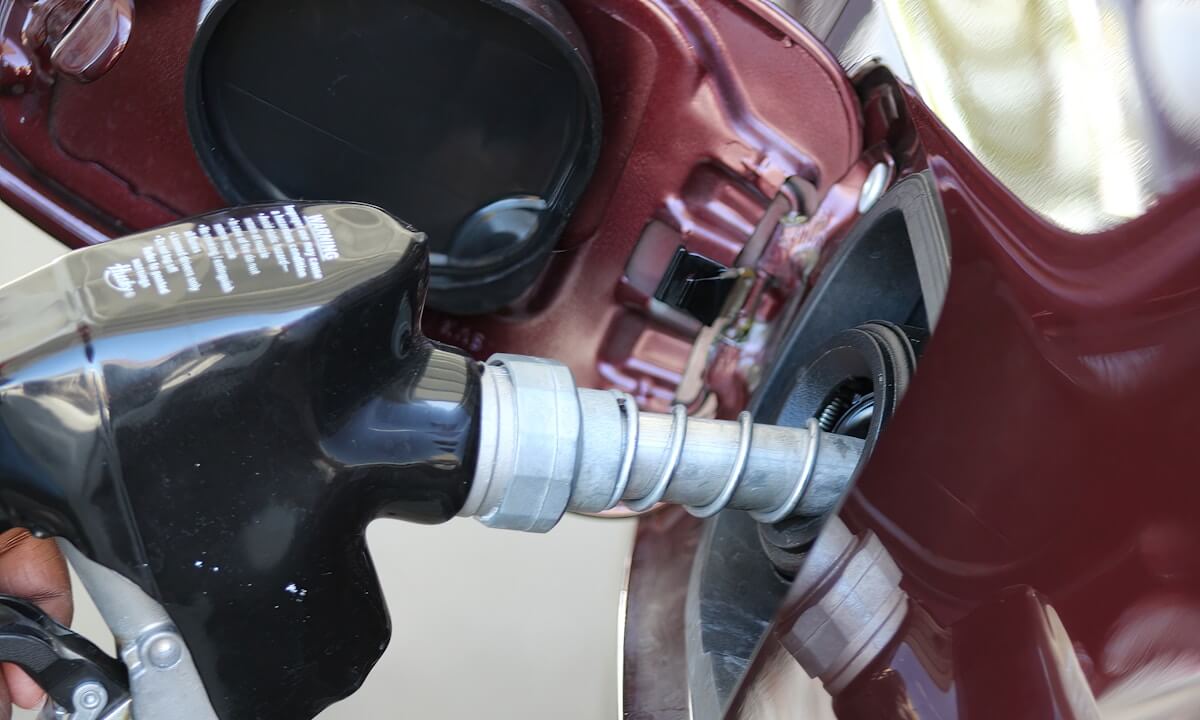
The total cost of Governor Mike Braun’s gas tax holiday is projected to be $533 million, affecting the state and local governments through October.
Why it matters: Motorists saved significantly at the pump, but the loss in revenue impacts road funding.
- Indiana’s gas taxes, which fund road work, will be paused through August 6, with local governments expected to lose $175 million.
Details:
- Braun plans to reimburse local governments from the State Highway Fund, covering their anticipated $175 million loss.
- The Indiana Department of Transportation (INDOT) faces a $358 million loss, with uncertainties about using state surplus to cover it.
What’s next:
- State Budget Director Chad Ranney will request fund transfers from the State Highway Fund on July 21 to cover the losses.
- Governor Braun hints at the need for legislative action for any further extensions of the gas tax holiday. (Indiana Capital Chronicle)
State Panel Winnows Applicants for Utility Regulator Opening; Interviews Set for Next Week

The nominating committee for the Indiana Utility Regulatory Commission has shortlisted 12 candidates for a vacancy on its board.
Why it matters: This selection is crucial as it impacts how utility services are regulated, affecting rates and service quality for Indiana residents.
- The commission is tasked with balancing the needs of ratepayers and utilities, ensuring fair rates and reliable service.
- Governor Mike Braun emphasizes affordability, seeking a commissioner who prioritizes the impact on Hoosier families and businesses.
The latest: Commissioner David Veleta’s resignation has prompted this selection. Governor Braun will appoint another Republican, maintaining political balance.
Meet the candidates:
- Josh Bain: Indianapolis City-County councilor with a history of GOP nominations.
- Tanner Bouchie: Business and family law leader.
- Phillip Casey: Heads an energy-focused law firm.
- Nathan Cazee: Works at Daikin Applied, shortlisted previously.
- Sean Fagan: LaPorte County prosecutor.
- Tim Rushenberg: U.S. Department of Education’s general counsel office.
- Pete Heuer: Ex-director at Ball State University.
- Anthony Sunta: Current IURC employee.
- Chris Switzer: Vigo County commissioner.
- Alfonso Vidal: Businessman, previously shortlisted.
- Henry Wilhelmus: Indiana Office of Energy Development.
- Joby Jerrells: Indiana Office of Attorney General.
What’s next: Interviews are set for next Thursday, with the governor to finalize the appointment soon after. Another appointment is expected, aligning with Braun’s previous selections. (Indiana Capital Chronicle)
Charted: America’s Tax Divide

America's state governments have split into two camps: those that tax what you earn, and those that tax what you spend, Axios' Russell Contreras writes.
- Why it matters: States built on income taxes ask more of high earners. States built on consumption taxes ask more of everyday spenders.
By the numbers: In 2025, 27 states — many in the Sun Belt — relied most on sales and gross receipts taxes, while 21 states, heavily located on the coasts, relied most on income taxes, per an Axios analysis of new Census data.
- Most sales-dependent: Texas (86.6%), South Dakota (83.1%), Florida (80.3%), Tennessee (79.4%), Washington (74.6%), Nevada (73.9%).
- Most income-dependent: Oregon (71%), New York (67%), Massachusetts (66.8%), California (61.1%), Connecticut (59.5%).
Between the lines: The divide isn't perfectly partisan. Blue Washington is sales-tax-reliant, while purple New Hampshire relies most heavily on corporate income tax (32.9%). (Axios)
Share the Torchbearer Newsletter with Your Network!

Not signed up for our weekly newsletter? Sign up today!
Important Dates:

Important Dates:
Thursday, July 16th at 9:00am: IURC candidate interviews streaming
Tuesday, July 28th at 10:00am: Agricultural Promotion and Regulation Task Force in the Senate Chamber
Tuesday, August 4th at 9:00am: ISC on Financial Institutions and Insurance in Room 404
Tuesday, August 4th at 10:00am: ISC on Roads and Transportation in the House Chamber
Tuesday, August 11th at 9:00am: State Board of Education at Government Center South or streaming
Tuesday, August 25th at 10:00am: Agricultural Promotion and Regulation Task Force in the Senate Chamber
Tuesday, August 25th at 11:30am: ISC on Public Health, Behavioral Health, and Human Services in the House Chamber
Wednesday, August 26 at 10:00am: ISC on Corrections and Criminal Code in the House Chamber
Wednesday, September 2nd at 10:00am: ISC on Roads and Transportation in the House Chamber
Tuesday, September 29th at 10:00am: Agricultural Promotion and Regulation Task Force in the Senate Chamber
We will add interim study committee meetings as they are announced.