
10/13/2026 Torchbearer Weekly Policy Update
Thank you for letting us be your trusted source for local, state, and federal policy updates.
Let’s dig in…
- Rokita Leads 16-State Lawsuit Against DuPont “Shell Game,” PFAS Pollution
- Trump Administration Proposes $70K Fee for International Students to Work in U.S.
- Ball State President Questions Timing of College Performance Funding Push
- Indiana Farm Bureau Targets Property Taxes, Rural Investment in 2027 Legislative Agenda
- Indiana’s September Revenue Report
- Indiana Fiscal Policy Institute Releases Report on State Approaches to Aligning Workforce Development and Social Services
- Right to Bail: Amendment Asks Voters to Rewrite Pretrial Detention Rules
- Welcome, Hailey!
- Share the Torchbearer Newsletter to with Your Network!
- Important Dates
Rokita Leads 16-State Lawsuit Against DuPont “Shell Game,” PFAS Pollution
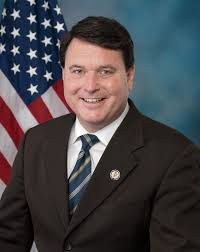
Indiana’s legal battle against PFAS contamination just got more complex as two defendants in the lawsuit allegedly form a shell company to shield $40 billion from potential payouts.
Why it matters: This maneuver could significantly impact the state’s ongoing efforts to secure compensation for PFAS contamination, posing a challenge to environmental justice and accountability.
- Rokita and 16 other states are now contesting this asset transfer, which could undermine the lawsuit’s financial outcomes.
By the numbers: PFAS chemicals are nearly indestructible and have been linked to severe health issues, affecting both human and environmental health.
- They are present in numerous products and have contaminated water systems across the globe.
What’s next: Rokita seeks a temporary restraining order to halt the asset transfer, aiming to preserve potential damages for affected Indiana families.
- The legal proceedings will continue as states build their case against the chemical giants. (Indy Star)
Trump Administration Proposes $70K Fee for International Students to Work in U.S.

The Department of Homeland Security is proposing a $70,000 fee for international students seeking to work in the U.S. through the OPT program.
Why it matters: This change could severely impact higher education and businesses reliant on international talent.
- American universities and tech companies heavily recruit international students for their expertise and tuition revenue.
- The fee could make the U.S. less attractive to international students, impacting innovation and economic growth.
What’s next: The public has 60 days to comment on this proposal before it can be finalized.
- Legal challenges are expected from higher education and business groups.
The stakes: International student enrollment has already seen a significant decline.
- A 17% decrease was recorded last fall, with predictions of further drops.
- Programs such as OPT are crucial for attracting international students to the U.S.
Flashback: Previous attempts to reform immigration and higher education policies have faced legal hurdles.
- A federal court recently blocked a rule limiting international students‘ stay to four years.
Our thought bubble: Imposing such a high fee might deter international talent, affecting the U.S.’s role as a leader in global education and innovation. (IBJ)
Ball State President Questions Timing of College Performance Funding Push
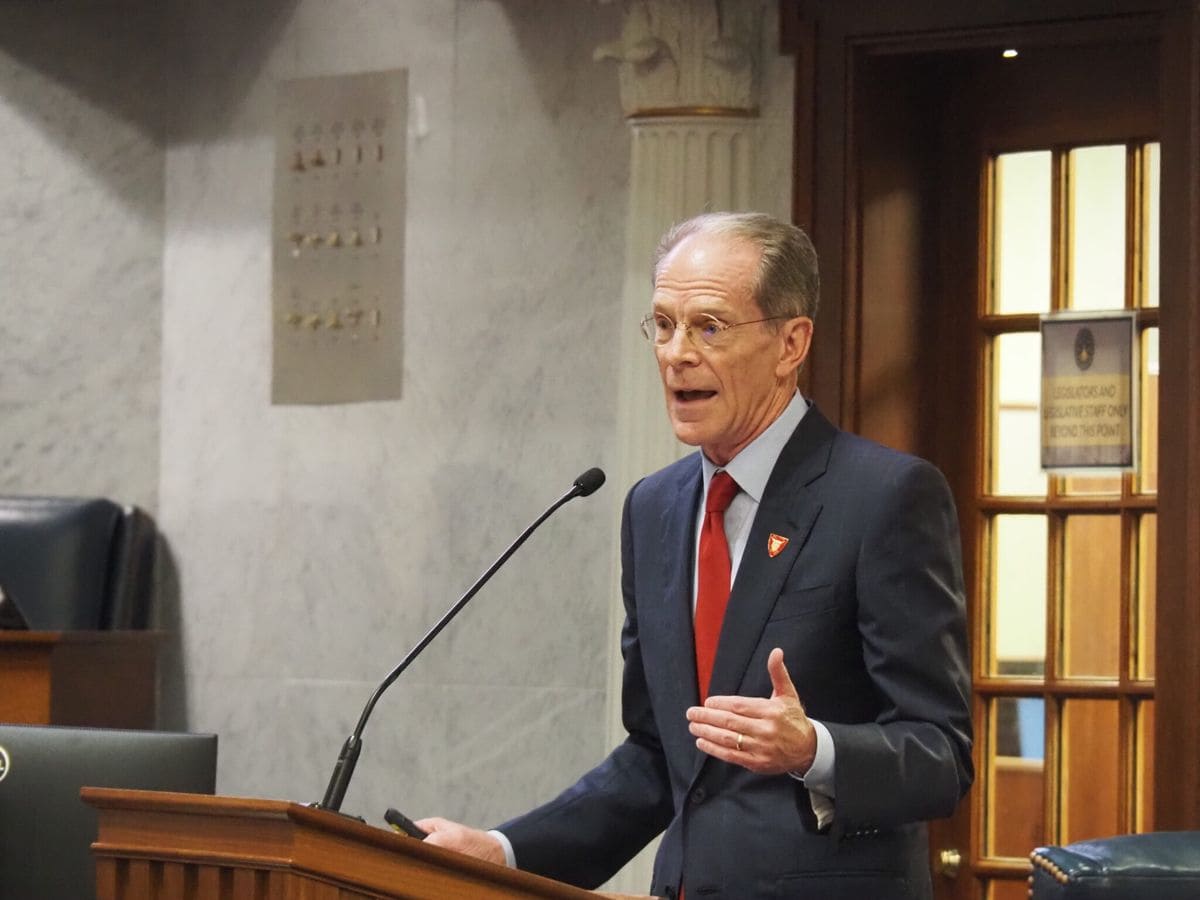
The Indiana Commission for Higher Education is pushing to restore performance funding, but Ball State University President Geoffrey Mearns says it’s too soon.
Why it matters: Indiana’s higher education funding ranks 46th in the nation, and the proposed funding formula aims to focus on affordability and industry alignment.
- With state reserves projected to hit $5.2 billion, the timing could be critical for universities like Ball State, whose funding hasn’t increased in two decades.
What’s new: The commission’s new formula prioritizes accessibility and on-time degree completion, presenting it to the State Budget Committee next month.
The big picture: University leaders, including Purdue’s Mitch Daniels, are highlighting successes like tuition freezes and increased retention rates to sway lawmakers.
Between the lines: College presidents aim to prove the value of higher education outcomes to the General Assembly, emphasizing collaboration with industry and cost-saving initiatives. (Indiana Capital Chronicle)
Indiana Farm Bureau Targets Property Taxes, Rural Investment in 2027 Legislative Agenda

Indiana farmers are heading into the 2027 legislative session with a clear message for lawmakers: the economic pressure on agriculture is not letting up, and state policy needs to keep pace.
Why it matters: Farmers face high input costs, tight margins, and elevated land prices, making it crucial for lawmakers to address immediate financial challenges and the future of Indiana agriculture.
- The Indiana Farm Bureau (INFB) emphasizes agriculture and rural investment, property tax reform, and strengthening the state’s food system.
Agriculture funding takes center stage: INFB seeks increased state investment in agriculture and rural communities, highlighting the need for stronger funding for the Indiana State Department of Agriculture and the Indiana State Board of Animal Health.
- Additional funding is needed to recruit critical personnel, such as meat inspectors and veterinarians, and support programs like Indiana Grown.
Property taxes remain a major flashpoint: INFB calls for further property tax reforms, proposing a reduction in the assessed value of agricultural-use buildings and exemptions for business personal property tax.
- They also advocate for transparent assessments and argue that Senate Enrolled Act 1 was a good start but more is needed.
Food policy becomes another battleground: INFB supports incentive programs for locally grown food and seeks expanded market opportunities for farmers.
- They oppose state-by-state regulations that could hinder farmers and food producers. (Inside Indiana Business)
Indiana’s September Revenue Report

State revenue exceeds expectations: Indiana’s state tax collections for September 2026 surpassed predictions with general fund revenues reaching $2,317.2 million.
Why it matters: These figures highlight Indiana’s robust fiscal health, offering confidence in sustained economic growth and funding for state priorities.
- Corporate tax collections significantly contributed to this positive outcome, being 25.4% above estimates.
- Such strong performance suggests resilience against economic fluctuations.
By the numbers:
- Sales tax collections: $988.6 million, slightly below estimates but 3.5% higher than September 2025.
- Income tax collections: $1,143.5 million, 5.1% above estimates, though slightly down from last year.
What’s next: Future financial outlooks will consider the evolving economic landscape, legislative impacts, and the upcoming fiscal quarter’s revenue activities. Monitoring these trends will be crucial as Indiana navigates the fiscal year.
Go deeper: The full commentary is available here.
Indiana Fiscal Policy Institute Releases Report on State Approaches to Aligning Workforce Development and Social Services
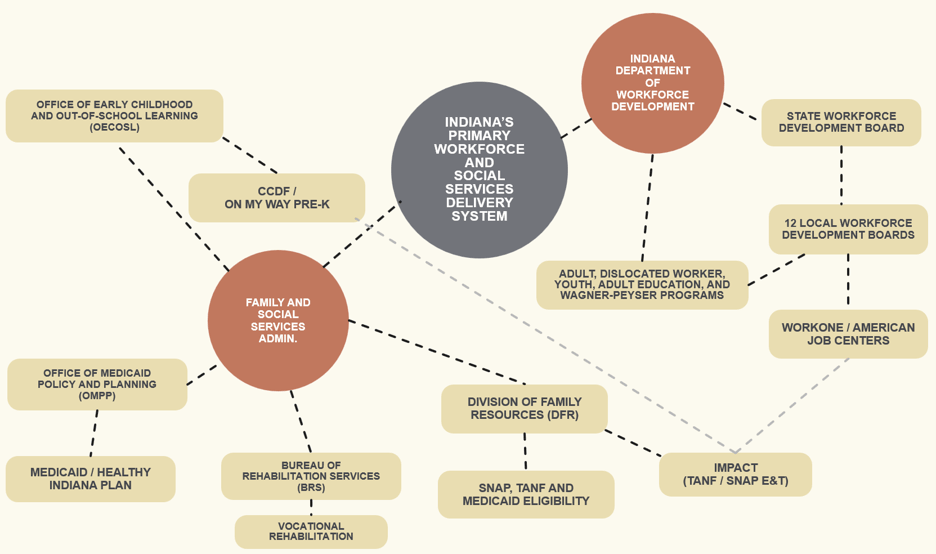
Workforce success depends on more than workforce programs. Childcare, health and food coverage, and other supports often determine whether a person can enter training, accept a job, and remain employed.
Why it matters: Addressing workforce challenges requires more than coordination — it demands integrated support systems.
- Texas, Michigan, and Florida illustrate varied approaches, highlighting the significance of clear direction and shared goals.
- Indiana has components for alignment but lacks connectivity, which limits cross-program referrals and information sharing.
The big picture: Indiana faces a decision: restructure program governance or enhance its current divided structure.
- A shared delivery model could reduce duplicate processes and create clearer accountability, requiring dedicated leadership and robust customer progress measures.
- Texas routes TANF, SNAP services, and childcare through local workforce boards, emphasizing statewide strategy and evaluation.
- Michigan maintains agency boundaries but creates pathways from public benefits to employment services through interagency agreements.
- Florida uses statutory authority and Governor’s leadership for outcome accountability, demonstrating that effective systems require defined responsibilities and operating protocols.
What’s next: Indiana could implement a common referral protocol, coordinated navigation through state offices, and early childcare screening.
- The state should focus on whether residents can successfully move from assistance and training into sustained employment, prioritizing accountability and customer pathway reliability.
Go deeper: Read the entire report here.
Right to Bail: Amendment Asks Voters to Rewrite Pretrial Detention Rules

Indiana judges may soon have the ability to deny bail for more defendants they believe pose a danger to the public.
Why it matters: This amendment would allow judges to deny bail if the state proves a defendant cannot be safely released, potentially impacting those accused of repeated violent crimes.
- Critics argue it could jeopardize due process rights, with defendants possibly spending months in jail without conviction.
Driving the news: Hoosiers will vote this fall on a proposed constitutional amendment to rewrite these rules, following approval by two successive general assemblies.
The stakes: Supporters say it’s needed to detain those committing crimes while on bail, while opponents worry about constitutional rights and the potential for abuse.
What’s next: The amendment will be on the Nov. 3 ballot, and if passed, could change the landscape of pre-trial detentions in Indiana. (Indiana Capital Chronicle)
Welcome, Hailey!

Hailey Fox recently joined the Torchbearer Public Affairs team as a Session Associate. She grew up and currently resides in Carmel, Indiana. In May of 2025, she graduated from Indiana University with a Bachelor of Science degree in Environmental Science and a minor in Urban Planning and Community Development (Go Hoosiers!!).
Following graduation, she moved to Massachusetts where she advised college students at University of Massachusetts - Amherst on various social and environmental campaigns. Teaching them how to be effective lobbyists and leaders was incredibly impactful, and she looks forward to carrying the lessons she learned into her work in Indiana.
Outside of the office, Hailey enjoys spending time with her family, friends, and labradoodle, Phineas, and spending time anywhere where she can reach nature. After working in Yellowstone National Park, her love for camping, hiking, and a good road trip grew exponentially and she is always looking for an adventure! She is eager to grow throughout her time as a Session Associate and learn more about TPA’s clients and their policy priorities. You can reach Hailey at hfox@torchbearerIN.com.
Share the Torchbearer Newsletter with Your Network!

Not signed up for our weekly newsletter? Sign up today!
Important Dates:

Important Dates:
Wednesday, October 14th at 9:30am: ISC on Fiscal Policy in Room 404
Wednesday, October 14th at 10:00am: ISC on Education in the House Chamber
Wednesday, October 14th at 1:00pm: State Fair Advisory Committee in the Senate Chamber
Thursday, October 15th at 1:30pm: Indiana Finance Authority Meeting at One North Capitol, Suite 900
Wednesday, October 21 at 9:00am: State Board of Education, Indiana Government Center
Thursday, October 22nd at 1:00pm: ISC on Pension Management Oversight in Room 404
Tuesday, November 3rd: Election Day
Thursday, November 12th, 10:00am: Indiana Early Learning Advisory Committee, Muncie Location TBD
Tuesday, November 17th: Organization Day
We will add interim study committee meetings as they are announced.