
8/18/2026 Torchbearer Weekly Policy Update
Thank you for letting us be your trusted source for local, state, and federal policy updates.
Let’s dig in…
- President Trump Approves Indiana Emergency Declaration, Mobilizes FEMA
- Gov. Braun Moves to Protect Storm Victims from Losing Insurance Coverage, Expands Emergency Housing Assistance
- Indiana Senate Republican Caucus Endorses Sen. Chris Garten as New Leader
- Indiana Transportation Construction Groups Call for State Road Funding Fix
- Bears Confirm Second Potential Stadium Site, Reaffirm Commitment to Hammond
- Young, Loeffler Pitch Expanded Small Business Lending During Indiana Visit
- Pressel: Indy Council’s Tax Hike Creates ‘Concrete’ Funding Source for Match
- Federal Grants to Indiana Fell Last Year by More than $700M
- The Majority-Minority Shift Changing Rural America
- New School Accountability Resources Available
- Share the Torchbearer Newsletter to with Your Network!
- Important Dates
President Trump Approves Indiana Emergency Declaration, Mobilizes FEMA
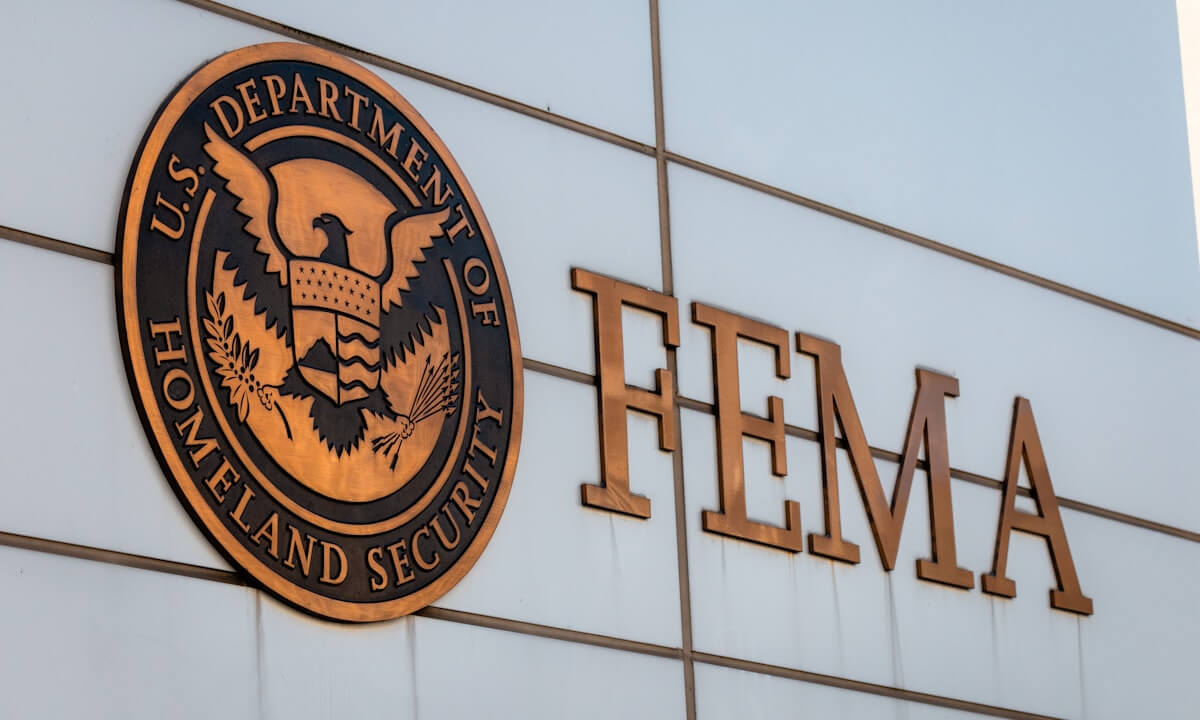
After severe weather caused substantial flooding and damage, President Trump approved an emergency declaration for Indiana, activating federal resources to aid recovery.
Why it matters: This declaration enables the Federal Emergency Management Agency (FEMA) to collaborate with state and local officials, addressing safety concerns in the aftermath of the storm.
Current efforts: Governor Mike Braun reports that all state public safety agencies are actively engaged in emergency response missions.
- The Indiana Housing and Community Development Authority is providing temporary housing grants for displaced residents.
- The State Disaster Relief Fund is activated, offering up to $5,000 in emergency aid grants.
What’s next: Damage assessments are underway to determine additional resource needs. The state is preparing a request for a Major Disaster Declaration to access further federal support.
- Hoosiers are encouraged to verify identities of anyone offering flood relief services to avoid scams.
- Temporary housing and emergency SNAP benefit replacements are available for eligible residents. (IndyStar)
Gov. Braun Moves to Protect Storm Victims from Losing Insurance Coverage, Expands Emergency Housing Assistance

Governor Mike Braun has taken decisive measures to safeguard Hoosier homeowners amid historic flooding and storm damage.
Why it matters: These actions provide critical relief for affected residents, ensuring they maintain insurance coverage and access essential resources during recovery.
Driving the news: Gov. Braun directed the Commissioner of Insurance to enforce a 60-day moratorium on insurance cancellations and suspend penalties for late payments.
- This initiative aims to protect policyholders directly impacted by the disaster.
- Emergency housing assistance, including hotel vouchers and rental aid, is also available for displaced Hoosiers.
What’s next: Hoosiers are urged to document damages, contact insurance agents, and remain cautious of potential scams.
- The Indiana Department of Insurance and Attorney General Rokita offer guidance on avoiding scams and understanding insurance coverage.
- Residents can file scam complaints at indianaconsumer.com or contact the Attorney General’s office for assistance. (Gov. Braun’s Newsroom)
Indiana Senate Republican Caucus Endorses Sen. Chris Garten as New Leader
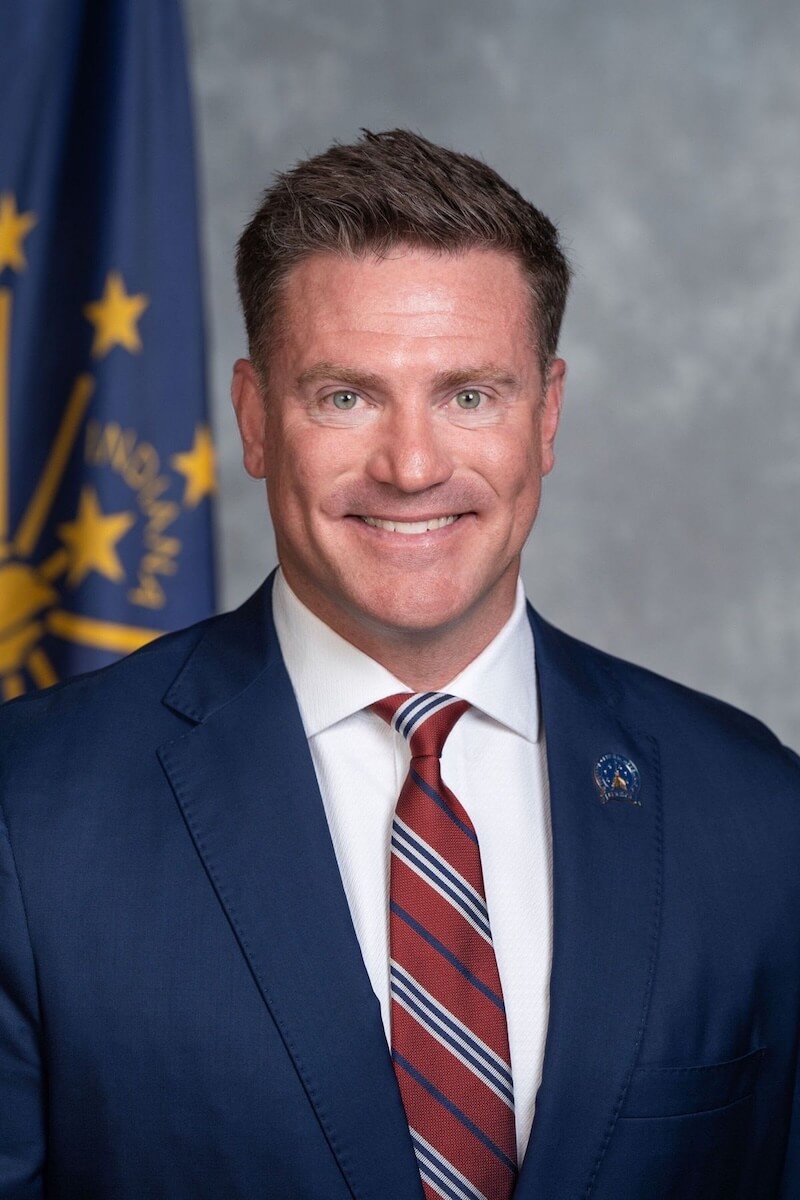
Sen. Chris Garten has been endorsed as the new leader by the Senate Republican caucus.
Why it matters: As Pro Tem-Elect, Garten’s leadership will shape the Senate Republicans‘ strategy for the 2027 legislative session, focusing on conservative principles and transparency.
- Garten emphasized his goals to scrutinize every dollar and safeguard taxpayer resources.
- He aims to execute a bold agenda to maintain Indiana’s prosperity.
What’s next: Garten will officially take over after the election but is already leading the campaign operation.
- He succeeds Rodric Bray, who will continue serving in the Senate. (Niki Kelly)
Indiana Transportation Construction Groups Call for State Road Funding Fix

The state of Indiana faces a critical need for diversified revenue sources to maintain and improve its road infrastructure, as highlighted by transportation construction groups.
Why it matters: Current funding, heavily reliant on fuel taxes, is inadequate due to increased vehicle fuel efficiency and rising construction costs.
- Without expanding its funding base, Indiana risks falling behind on essential road maintenance and improvements, which could affect economic growth and community connectivity.
Driving the news: Gov. Mike Braun has repeatedly suspended gasoline taxes, citing emergencies like the war in Ukraine and Canadian oil field fires, which has disrupted local road maintenance.
- The state’s transportation groups, including the Build Indiana Council and Indiana Constructors Inc., agree the suspension was necessary but unsustainable long-term.
By the numbers: The Indiana Local Technical Assistance Program reports that maintaining current road conditions requires $1.2 billion annually, while improving them would need at least $2 billion.
- The Indiana Department of Transportation estimates an additional $1.2 billion is needed annually for state roads and bridges.
What’s next: The construction groups propose alternative user-based sources such as higher registration fees, tolls, and vehicle miles traveled charges.
- They also suggest increasing fees for electric and hybrid vehicles to ensure road users contribute fairly, emphasizing that road users should bear the cost of maintenance and improvements. (Inside Indiana Business)
Bears Confirm Second Potential Stadium Site, Reaffirm Commitment to Hammond

The president and CEO of the Chicago Bears, Kevin Warren, announced that Hammond is a “viable” location for a new football stadium.
Why it matters: The team is focused on building a stadium in Hammond, which could bring significant economic development to the area.
- The Lost Marsh site has undergone due diligence, and the team is exploring another site at Wolf Lake Terminals.
- This dual-site approach could enhance the team’s vision for a holistic mixed-use environment.
What they’re saying: “We are working very hard to make sure that we build a holistic environment in Hammond,” Warren said.
- Chicago Bears Chairman George McCaskey assured the team will retain its name, “We will be the Chicago Bears.”
What’s next: The team maintains regular communication with Indiana officials and aims to create a dynamic atmosphere in Hammond. No timeline for groundbreaking has been set yet. (Inside Indiana Business)
Young, Loeffler Pitch Expanded Small Business Lending During Indiana Visit

U.S. Small Business Administration chief Kelly Loeffler suggests increasing federal loan limits for small businesses to contend with rising equipment costs.
Why it matters: Enhancing loan limits can significantly boost the economy, providing necessary capital for farmers and manufacturers to invest, expand, and navigate fluctuating input costs.
- Loeffler and U.S. Sen. Todd Young emphasize the importance of certainty in public policy to encourage capital investment.
Driving the news: During a recent visit to Indiana, Loeffler and Young toured local businesses and participated in discussions with farmers on agriculture and small business challenges.
- They advocated for tax cuts, deregulation, and the administration’s trade policies to support local manufacturing.
What they’re saying: Young, poised to possibly lead the Senate Small Business Committee, supports revisiting loan limits.
- “Increasing the loan amounts would be rocket fuel for the economy,” Young stated, highlighting the critical need for policy adjustments. (Indiana Capital Chronicle)
Pressel: Indy Council’s Tax Hike Creates ‘Concrete’ Funding Source for Match
The Democrat-led Indianapolis City-County Council has put an end to a long debate by deciding to increase vehicle registration fees to secure road funding.
Why it matters: This move ensures Indianapolis can meet the state’s matching grant requirements, securing $50 million for road improvements.
- State Rep. Jim Pressel emphasized the importance of new revenue sources to fix the city’s notoriously poor roads.
- The tax increase is set to generate $71 million by 2027, providing a reliable funding source.
The big picture: The council’s decision aligns with legislation crafted by Pressel, which allows Indianapolis to impose higher surtaxes.
- The legislation includes a graduated scale for matching grants, requiring increased city investment over the years.
What’s next: Mayor Joe Hogsett aims to secure the state’s match and ensure funds are used wisely for the benefit of Indianapolis residents.
- Pressel believes the wheel tax provides a concrete revenue source, crucial for long-term road improvements. (IBJ)
Federal Grants to Indiana Fell Last Year by More than $700M
The state of Indiana received $733 million less from the federal government last year compared to the previous year, according to an analysis by award indexer Granted.
Why it matters: This reduction in federal funding could impact various state programs and initiatives, particularly those that rely heavily on federal assistance.
- Medicaid grants increased to $15.9 billion, up from $14.7 billion, making up 70% of federal receipts.
- However, competitive grants fell to $6.7 billion, down 22% from the previous $8.6 billion.
- The decrease in funding affects programs like the Broadband Equity, Access and Deployment initiative, which dropped from $868 million to zero, affecting high-speed internet expansion plans.
- Funding for renewable energy transitions under the New Empowering Rural America program also fell to zero from nearly $679 million, impacting rural energy projects.
Yes, but: President Trump’s Powering Affordable Reliable Technology program will start accepting interest letters for loans next month, offering opportunities for investment in biomass, geothermal, and hydroelectricity.
What’s next:
- Indiana must explore new funding avenues to offset the gaps left by reduced federal support, particularly in infrastructure and health initiatives.
- The state is also considering innovative programs to bolster its economic resilience amidst these financial challenges. (Indiana Capital Chronicle)
The Majority-Minority Shift Changing Rural America

The U.S. is projected to become majority-minority in 2046, but hundreds of rural pockets crossed that demographic benchmark years ago, an Axios analysis finds.
Why it matters: The evolving face of rural America, driven both by immigration and increased mobility, has invigorated communities, increased their diversity — and presented new challenges.
- Rural governments dealing with rapid change, for example, often have few interpreters, bilingual election workers or translated materials — the machinery that turns civil-rights protections into access.
- Population shifts, particularly in rural areas, can leave schools, courts and election offices struggling to catch up.
The demographic transformations are evident in Kansas and Nebraska, where immigrants work in meatpacking plants, in Hispanic communities in South Texas and mostly Black areas of the South, and in Alaska's Native population centers, where white residents are leaving or dying off.
- The shifts are putting unprecedented pressure on rural schools, courts, health departments and election offices, which often are cash-strapped with limited personnel.
- At the same time, the Trump administration has revoked a longstanding federal language-access directive and narrowed some anti-discrimination enforcement tools.
By the numbers: An Axios analysis of federal data finds that 403 U.S. counties — roughly 12.8% of the national total — already are majority-minority.
- That includes 221 "non-metro counties" and 182 counties in urban and suburban metro areas.
- The non-metro or rural counties are spread across 27 states and have a combined estimated population of roughly 4.5 million.
- Of those rural counties, 205 — or 92.8% — had fewer than 50,000 residents, the Axios review found.
Zoom in: Texas leads the nation with 57 rural majority-minority counties — all Hispanic along the Southern border and into the oil-rich Panhandle. Mississippi has 25 such counties, followed by New Mexico with 18, Georgia with 17 and Alaska with 15.
- The growing number of majority-minority counties go well beyond those states: In southwestern Kansas, Seward County was about 65% white in 2000; now it's 73% nonwhite. There were similar population shifts in nearby Ford and Finney counties.
Not all of these rural counties' populations are tipping demographically for the same reasons.
- Counties in the Midwest and Southwest are seeing minority population growth, driven by immigration and higher birth rates.
- Meanwhile, many Southern and Appalachian counties are tipping because the white population dying off or leaving faster than people of color.
The Axios analysis joined 2020 Decennial Census demographic data with the USDA's 2023 Rural-Urban Continuum Codes.
- A county is defined as majority-minority when fewer than 50% of residents identify as non-Hispanic white alone.
- Nonmetro counties are defined as those falling outside USDA metropolitan labor market boundaries.
State of play: Fast-growing Hispanic agricultural hubs and Southern poultry towns are absorbing non-English-speaking populations with little to no federal mandate for bilingual ballots, poll workers or court interpreters.
- Federal watchdogs base much of their Section 203 language-assistance coverage under the Voting Rights Act on rigid population thresholds, leaving dispersed language-minority communities largely unserved.
What they're saying: "Rural, small local governments struggle with service delivery. Period," Lisa R. Pruitt, a distinguished professor of law at UC-Davis who studies rural-urban differences, tells Axios.
- Pruitt said the pressure is particularly acute in communities that were already struggling to deliver basic services before being asked to provide interpreters, translated materials and multilingual communication.
- "It's a really big challenge for things like court interpreters and any sort of public health information," Pruitt said. (Axios)
New School Accountability Resources Available

The Indiana Department of Education (IDOE) has launched a new online hub detailing its A-F School Accountability model, aimed at enhancing K-12 education.
Why it matters: This framework, adopted by the Indiana State Board of Education, elevates traditional academic outcomes and introduces measures for skills and credentials vital for success beyond graduation.
- It offers guidance to parents, educators, and community stakeholders, supporting their understanding of this transformative model.
What’s next: The first cycle of school letter grades, based on the 2025-26 school year, will be released later this year.
- These initial results mark a “year zero” transitional period, setting the stage for future accountability measures. (Education Matters)
Share the Torchbearer Newsletter with Your Network!

Not signed up for our weekly newsletter? Sign up today!
Important Dates:

Important Dates:
Tuesday, August 25th at 11:30am: ISC on Public Health, Behavioral Health, and Human Services in the House Chamber
Wednesday, August 26th at 10:00am: ISC on Corrections and Criminal Code in the House Chamber
Wednesday, August 26th at 1:00pm: ISC on Government in Room 156-A
Wednesday, September 2nd at 10:00am: ISC on Roads and Transportation in the House Chamber
Wednesday, September 2nd at 10:00am: Agricultural Promotion and Regulation Task Force in the Senate Chamber
Tuesday, October 13th at 10:00am: Agricultural Promotion and Regulation Task Force in the Senate Chamber
Friday, October 23rd at 9:30am: Justice Reinvestment Advisory Council (JRAC) at the Office of Judicial Administration’s Tech Training Room
We will add interim study committee meetings as they are announced.